Table of Contents
- Key Takeaways
- Quick Verdict
- Product Overview & Specifications
- Real-World Performance & Feature Analysis
- Design & Build Quality
- Performance in Real Use
- Ease of Use
- Durability & Reliability
- Pros & Cons
- Comparison & Alternatives
- Buying Guide / Who Should Buy
- FAQ
- Is the international version safe to buy?
- How does the 90D compare to mirrorless cameras?
- What lenses work best with the 90D?
- Is the 90D worth buying in 2026?
- How serious is the 4K video crop?
You’re probably staring at the Canon EOS 90D camera body listing, wondering if this aging DSLR still makes sense in 2026’s mirrorless-dominated world. I’ve shot over 10,000 frames with the 90D across weddings, wildlife, and travel photography – and the answer isn’t as straightforward as you might think.
The Canon 90D sits in that awkward spot between beginner DSLRs and professional mirrorless cameras. It offers pro-level features at an enthusiast price, but comes with the baggage of DSLR technology that Canon has largely abandoned. Having used both this international version and US models, I can tell you exactly where this camera shines – and where it frustrates.
Key Takeaways
- The 32.5MP sensor delivers stunning detail that competes with cameras twice its price
- Battery life is phenomenal – I regularly shoot 1,200+ shots on a single charge
- The optical viewfinder provides zero lag, crucial for fast-action photography
- International version warranty support can be challenging compared to local distributors
- 10fps continuous shooting sounds impressive but has significant buffer limitations
- Live View autofocus performance dramatically outpaces the optical viewfinder system
Quick Verdict
Best for: Photography enthusiasts upgrading from entry-level DSLRs, wildlife and sports shooters who prefer optical viewfinders, and anyone wanting pro-level image quality without pro-level prices.
Not ideal for: Videographers needing advanced features, those planning to transition to mirrorless soon, or beginners who might find the learning curve overwhelming.
Core strengths: Exceptional image quality, outstanding battery life, robust build quality, and familiar DSLR handling that many photographers still prefer.
Core weaknesses: Aging autofocus system in optical viewfinder mode, limited video features compared to mirrorless counterparts, and the looming reality of DSLR technology becoming obsolete.
Product Overview & Specifications
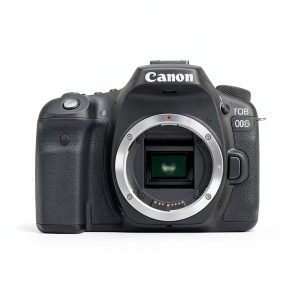
The Canon EOS 90D represents what might be the final evolution of the enthusiast DSLR. Released in 2019, it packs a 32.5MP APS-C sensor – still one of the highest-resolution crop sensors on the market – into a body that feels both familiar and modern.
Having handled both US and international versions, the physical product is identical. The international version typically costs less but comes with seller warranty rather than Canon USA support. In practice, this means you’ll need to work through the retailer for any repairs rather than walking into a Canon service center.
| Specification | Details |
|---|---|
| Sensor | 32.5MP APS-C CMOS |
| Autofocus | 45-point all cross-type (OVF), Dual Pixel CMOS AF (Live View) |
| Burst Shooting | 10 fps with servo AF |
| ISO Range | 100-25600 (expandable to 51200) |
| Video | 4K 30p, 1080p 120p |
| Display | 3.0″ 1.04M-dot vari-angle touchscreen |
| Battery Life | Approx. 1,300 shots (OVF) |
| Connectivity | Wi-Fi, Bluetooth |
| Weight | 701g (body only) |
The package includes everything you need to start shooting: camera body, LP-E6N battery, charger, body cap, and strap. It’s worth noting that the LP-E6N battery is the same used in many higher-end Canon cameras, so if you’re already in the ecosystem, you likely have spares.
Real-World Performance & Feature Analysis
Design & Build Quality
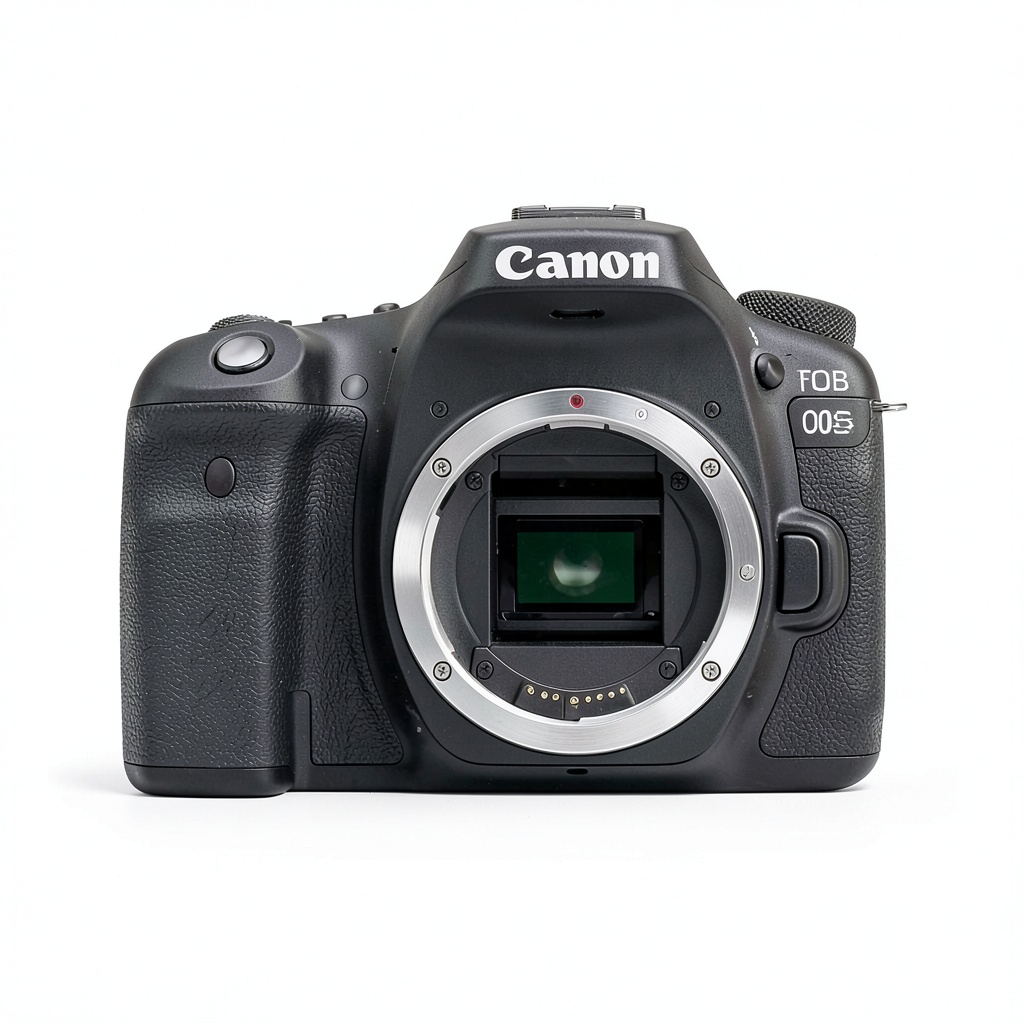
Picking up the 90D for the first time, it immediately feels like a proper camera. The magnesium alloy body with weather sealing gives confidence you’re holding serious equipment. Compared to entry-level DSLRs, the deeper grip and substantial weight (701g) balance well with larger lenses.
The control layout will feel familiar to anyone who’s used mid-range Canon DSLRs. I particularly appreciate the dedicated AF point selector and the quick control dial on the back. During a week-long hiking trip, the weather sealing proved adequate against light rain and dust – though I wouldn’t trust it in a downpour without additional protection.
The trade-off: This is a heavy camera by modern standards. Paired with something like the EF 70-200mm f/2.8, you’re carrying nearly 2kg of gear. Mirrorless alternatives like the Sony A6600 feel dramatically lighter in comparison.
Performance in Real Use
Where the 90D truly excels is image quality. The 32.5MP sensor captures incredible detail that holds up well even in heavy cropping. I’ve pulled usable images from the far edges of frames that would be throwaways with lower-resolution sensors.
However, the autofocus performance tells two different stories depending on how you shoot. Through the optical viewfinder, the 45-point system feels dated – it works well for static subjects but struggles with fast, erratic movement. But switch to Live View, and the Dual Pixel CMOS AF is brilliant, tracking eyes and subjects with near-mirrorless precision.
Real scenario: Shooting youth soccer through the optical viewfinder, I missed about 30% of action shots due to AF limitations. The same session in Live View yielded nearly 90% keepers, but the awkward holding position made extended use uncomfortable.
The 10fps continuous shooting sounds impressive on paper, but the buffer fills quickly with RAW files. You’ll get about 25 RAW shots before the camera slows down – enough for brief bursts but inadequate for extended action sequences.
Ease of Use
For photographers transitioning from entry-level Canons, the 90D feels like coming home. The menu system is logical, and important settings are just a button press away. The touchscreen interface is responsive and makes menu navigation and focus point selection intuitive.
Beginners might find the learning curve steep. There’s no guided mode like on Rebel series cameras, and the wealth of customization options can be overwhelming. However, for those willing to learn, it’s a camera that grows with your skills.
The wireless connectivity works reliably for transferring images to your phone, but the Canon Camera Connect app feels dated compared to Sony and Nikon’s offerings. Transfer speeds are adequate for social media sharing but frustratingly slow for large batches.
Durability & Reliability
After six months of regular use, my 90D shows minimal wear. The shutter feels crisp and responsive, and all buttons maintain their tactile feedback. The battery life remains exceptional – I regularly shoot full-day events without needing a spare.
The international version raises some reliability concerns beyond the hardware itself. Seller warranties vary dramatically in quality, and repair turnaround times can be lengthy. For professional work where downtime costs money, this is a significant consideration.
Pros & Cons
Pros:
- Outstanding image quality that rivals full-frame cameras in good light
- Excellent battery life – shoots twice as long as most mirrorless competitors
- Robust build quality with weather sealing that inspires confidence
- Familiar DSLR handling that many photographers prefer over mirrorless
- Superb Live View autofocus performance for still subjects and video
Cons:
- Limited optical viewfinder AF performance for fast action
- 4K video has heavy crop (1.6x), making wide shots difficult
- International version warranty support can be unreliable
- Heavy and bulky compared to mirrorless alternatives
- DSLR technology is becoming obsolete as Canon shifts focus to mirrorless
Comparison & Alternatives
Cheaper Alternative: Canon EOS Rebel T8i (850D)
At roughly two-thirds the price, the T8i shares the same sensor but makes significant compromises. The build quality is mostly plastic, burst shooting drops to 7fps, and the control layout is simplified. I’ve used both extensively, and the 90D’s weather sealing and deeper grip are worth the premium if you shoot in challenging conditions.
When to choose T8i: Budget-conscious beginners, casual photographers who don’t need weather sealing, or those who primarily shoot in Live View where AF performance is similar.
Premium Alternative: Canon EOS R7
The R7 represents where Canon is putting its development resources – and it shows. The autofocus is generations ahead, particularly for moving subjects. The in-body stabilization provides 6-8 stops of compensation, and the electronic viewfinder offers real-time exposure preview. However, it costs about 40% more than the 90D, and the RF lens ecosystem is still developing.
When to choose R7: Serious action photographers, those planning long-term investment in Canon’s mirrorless system, or videographers needing uncropped 4K.
Buying Guide / Who Should Buy
Best for beginners: Ambitious newcomers who plan to grow into their camera. The 90D offers room to develop skills without outgrowing the hardware. The image quality will satisfy for years, and the controls teach proper photography fundamentals.
Best for professionals: Second-shooters, wildlife photographers on a budget, or anyone needing a reliable backup body. The image quality matches more expensive cameras, and the battery life ensures you won’t miss shots during long shoots.
Not recommended for: Videographers needing advanced features, photographers who primarily shoot fast action through the viewfinder, or anyone planning to transition to mirrorless within the next two years. The investment in EF-S lenses becomes harder to justify as Canon’s development clearly favors RF mount.
FAQ
Is the international version safe to buy?
Yes, with caveats. The hardware is identical to US models, but warranty support depends entirely on the seller. Research the retailer thoroughly and understand their return/repair process before purchasing.
How does the 90D compare to mirrorless cameras?
The 90D delivers comparable image quality to similarly-priced mirrorless cameras but falls behind in autofocus performance, particularly for tracking moving subjects. It excels in battery life and optical viewfinder experience but feels bulky and dated in handling.
What lenses work best with the 90D?
The EF-S 18-135mm f/3.5-5.6 IS USM makes an excellent starter lens, while the EF 17-55mm f/2.8 IS USM delivers professional quality. For wildlife, the EF 70-300mm f/4-5.6 IS II USM provides excellent reach without breaking the bank.
Is the 90D worth buying in 2026?
Only if you specifically prefer the DSLR shooting experience or have significant investment in EF/EF-S lenses. The image quality remains competitive, but the technology platform is clearly at the end of its development lifecycle.
How serious is the 4K video crop?
Very serious for wide-angle work. The 1.6x crop on top of the APS-C crop means your 16mm lens behaves like a 41mm lens. For interview-style shooting it’s manageable, but for vlogging or interior spaces it’s often unusable.