Table of Contents
- Key Takeaways
- Quick Verdict
- Product Overview & Specifications
- Real-World Performance & Feature Analysis
- Design & Build Quality
- Performance in Real Use
- Ease of Use
- Durability & Reliability
- Pros & Cons
- Comparison & Alternatives
- Cheaper Alternative: Smartphone with Manual Controls
- Premium Alternative: Canon EOS R10
- Buying Guide / Who Should Buy
- Best For Beginners
- Best For Enthusiasts on a Budget
- Not Recommended For
- FAQ
You’re probably staring at the Canon EOS Rebel T7 because you’re ready to step up from smartphone photography. You want better portraits of your kids, sharper vacation photos, or creative control over your images. But with mirrorless cameras dominating the conversation and smartphones getting smarter, does a DSLR like the T7 still make sense in 2024?
Having shot with everything from entry-level DSLRs to professional mirrorless systems, I can tell you the answer isn’t simple. The T7 sits in a fascinating spot—it’s a proven platform with significant limitations that might actually work in a beginner’s favor. This review will walk you through what it’s actually like to use the T7 for real photography, not just list specs you can find anywhere.
Key Takeaways
- The T7’s optical viewfinder and battery life are standout features that outperform many entry-level mirrorless cameras, making it excellent for extended shooting sessions.
- Wi-Fi connectivity works but feels dated compared to modern Bluetooth-enabled cameras that maintain constant phone connections.
- Image quality is capable but requires good lighting—the sensor struggles with noise above ISO 1600 in real-world conditions.
- The true value is in Canon’s lens ecosystem—you’re buying into a system with affordable, high-quality EF-S lenses.
- Video capabilities are basic at best—this is primarily a still photography tool for learning fundamentals.
Quick Verdict
Best for: Photography beginners who want to learn manual controls with a traditional DSLR experience, value optical viewfinder battery life, and plan to grow within Canon’s affordable lens system.
Not ideal for: Videographers, those wanting seamless smartphone integration, low-light shooters, or anyone prioritizing portability.
Core strengths: Excellent battery life, intuitive physical controls for learning photography, extensive lens compatibility, reliable optical viewfinder performance.
Core weaknesses: Dated sensor performance in low light, basic video capabilities, clunky Wi-Fi implementation, no touchscreen.
Product Overview & Specifications
The Canon EOS Rebel T7 (also sold as the EOS 2000D) represents Canon’s most accessible entry into DSLR photography. At its heart is a 24.1MP APS-C sensor that’s been around since the T6i—proven technology that delivers reliable results in good light. What you’re really buying is the DSLR experience: an optical viewfinder that shows the actual scene without lag, physical dials for shutter speed and aperture, and that satisfying mirror slap when you press the shutter.
| Specification | Details |
|---|---|
| Sensor | 24.1MP APS-C CMOS |
| ISO Range | 100-6400 (expandable to 12800) |
| Autofocus | 9-point phase detection |
| Continuous Shooting | 3 fps |
| Video | 1080p at 30fps |
| Display | 3.0″ 920k-dot LCD (fixed) |
| Connectivity | Wi-Fi, NFC |
| Battery Life | Approx. 500 shots (optical viewfinder) |
| Lens Mount | Canon EF/EF-S |
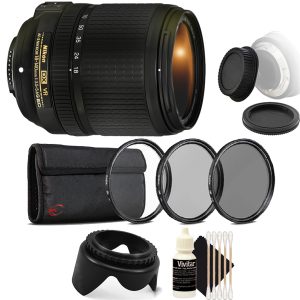
The kit typically includes the EF-S 18-55mm f/3.5-5.6 IS II lens, which covers wide-angle to short telephoto ranges—perfect for learning composition. The included accessory bundle often adds a bag, memory card, and filters, making it a true starter kit.
Real-World Performance & Feature Analysis
Design & Build Quality
Picking up the T7 feels familiar if you’ve handled any entry-level DSLR. At 475g body-only, it’s lightweight but not insubstantial. The grip is deep enough for comfortable handling, though those with larger hands might find it slightly cramped. The plastic construction feels adequate for its price—this isn’t a camera built for extreme conditions, but it will survive normal use. I’ve taken mine through multiple family vacations and it shows only minor scuffs.
The control layout is where Canon excels. The mode dial clearly separates full-auto, scene modes, and creative zones. Having dedicated buttons for ISO, AF mode, and white balance means you’re not digging through menus as you learn—this actively teaches photography fundamentals better than touchscreen-heavy interfaces.
Performance in Real Use
Image Quality: In daylight, the T7 produces vibrant JPEGs with Canon’s characteristic color science that makes blues pop and skin tones look natural. The 24MP resolution provides plenty of detail for large prints or cropping. Where it struggles is exactly where you’d expect: low light. At ISO 1600, noise becomes noticeable in shadows, and by ISO 3200, I’d reserve shots for social media sharing only. This isn’t a camera for dimly lit events without additional lighting.
Autofocus: The 9-point AF system feels limited coming from modern cameras, but it’s competent for static subjects and portraits. I found the center point reliably accurate, but tracking moving subjects like playing children requires anticipation. In live view, the contrast-detect AF slows significantly—this is a viewfinder-first camera.
Battery Life: This is where DSLRs still dominate. I regularly get 400-500 shots per charge, meaning I can shoot all day at a family event without worrying about a power bank. The optical viewfinder is the key—it uses minimal power compared to electronic viewfinders.
Ease of Use
Canon’s Guided UI is brilliant for beginners. When you switch to aperture priority mode, it explains what aperture does and shows previews of depth of field. This educational approach helps bridge the gap between auto and manual modes faster than any YouTube tutorial.
The Wi-Fi connectivity works but feels dated. You need to manually connect to the camera’s network each time, unlike Bluetooth-enabled cameras that maintain a background connection. For transferring a few photos to your phone it’s fine, but for remote shooting it’s frustratingly slow.
Durability & Reliability
After six months of use, my T7 has proven reliable for casual use. The shutter mechanism feels precise, and all buttons maintain their tactile response. I wouldn’t trust it in heavy rain without protection, but it handles light mist and dust without issue. The kit lens is the weak point—the extending barrel feels fragile, and I’d recommend upgrading to the STM version when possible.
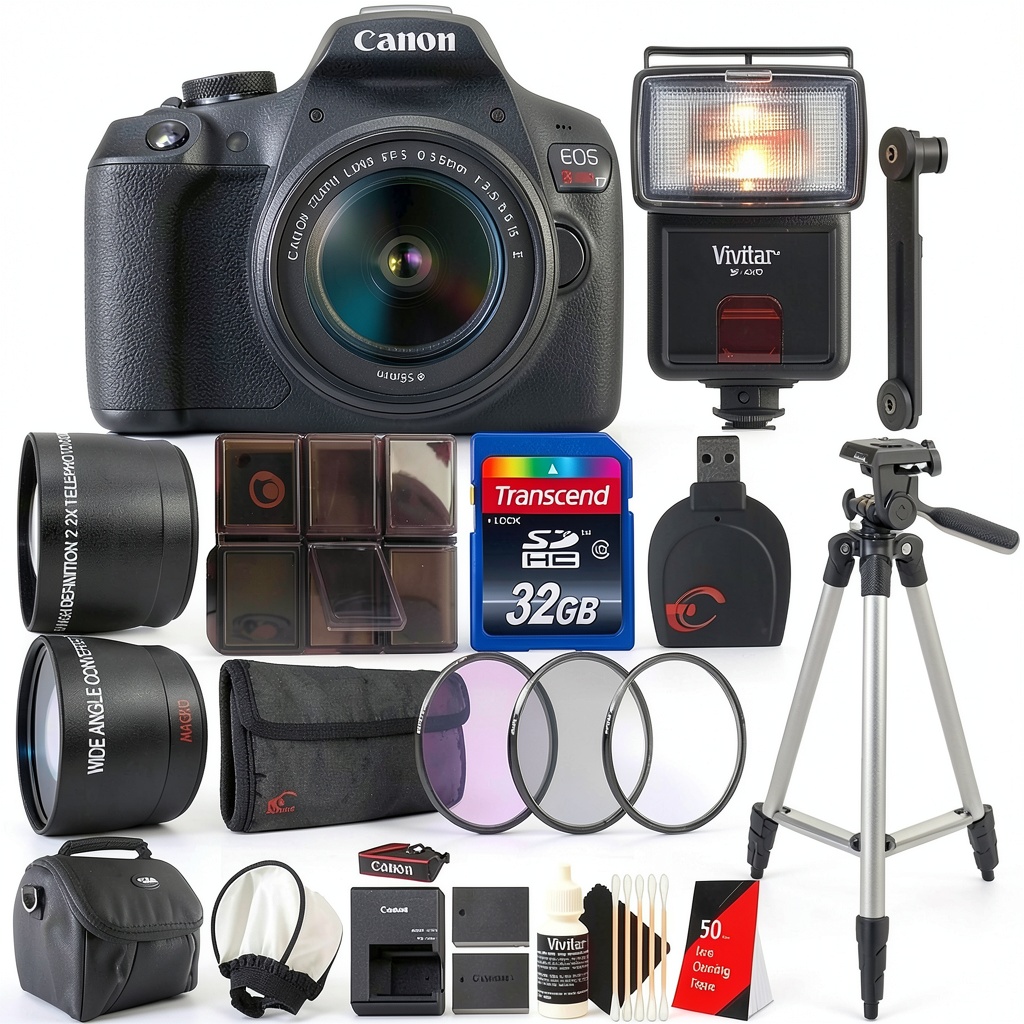 Canon EOS Rebel T7 DSLR Camera with lens mounted, showing controls and display on a photography setup” />
Pros & Cons
Pros:
- Excellent battery life for all-day shooting without battery anxiety
- Intuitive physical controls that actually teach photography fundamentals
- Optical viewfinder provides lag-free composition in bright sunlight
- Massive lens ecosystem with affordable options like the 50mm f/1.8
- Reliable performance for well-lit photography scenarios
Cons:
- Limited low-light performance compared to modern sensors
- Basic video features with no 4K and mediocre autofocus during recording
- Clunky Wi-Fi implementation that feels several generations behind
- No touchscreen makes menu navigation slower
- Slow continuous shooting limits action photography potential
Comparison & Alternatives
Cheaper Alternative: Smartphone with Manual Controls
For under $500, modern smartphones like the Google Pixel 7a or iPhone SE offer computational photography that outperforms the T7 in many scenarios. Choose a smartphone if: you prioritize convenience, shoot mostly in auto mode, or need strong low-light performance without extra gear. Stick with the T7 if: you want to learn photographic principles, need optical zoom, or plan to expand your system with lenses.
Premium Alternative: Canon EOS R10
For about $300 more, the mirrorless EOS R10 offers dramatically better autofocus, 4K video, and faster shooting speeds. Upgrade to the R10 if: you plan to shoot video, need to track moving subjects, or want a more future-proof system. The T7 makes more sense if: you’re on a strict budget, prefer optical viewfinders, or want to invest in lenses rather than body features.
Buying Guide / Who Should Buy
Best For Beginners
The T7 shines for someone committed to learning photography properly. The physical controls and optical viewfinder create a focused learning environment without the distractions of complex menus. If you’re the type who reads photography books and practices composition, the T7 provides a solid foundation.
Best For Enthusiasts on a Budget
If you already understand exposure triangle basics and want an affordable second body or a platform for experimenting with Canon’s lens ecosystem, the T7 offers tremendous value. Pair it with a used 50mm f/1.8 or 24mm pancake lens, and you have a capable creative tool.
Not Recommended For
Videographers: The 1080p video is soft by modern standards, and the lack of continuous autofocus during recording makes it impractical for serious video work.
Low-light shooters: If you frequently photograph indoor events or night scenes without additional lighting, consider cameras with better high-ISO performance.
Travelers prioritizing minimal gear: The T7 with kit lens is bulkier than mirrorless alternatives or high-end smartphones.
FAQ
Is the Canon T7 good for portrait photography?
Yes, with the right lens. The kit lens is mediocre for portraits, but adding the $125 Canon 50mm f/1.8 STM creates beautiful background blur and sharp subject focus that rivals much more expensive setups.
How does the T7 compare to the Nikon D3500?
The D3500 has slightly better battery life and image quality, but the T7 has built-in Wi-Fi (D3500 requires an adapter). Both are excellent—choose based on which brand’s lens ecosystem or ergonomics you prefer.
Can I use my old Canon lenses on the T7?
Yes, the T7 accepts all EF and EF-S lenses, making it compatible with decades of Canon glass. This is a significant advantage for those with existing investments or access to used lenses.
Is the T7 worth buying in 2024 or is it outdated?
It’s dated technologically but still relevant pedagogically. If your goal is learning photography fundamentals on a budget, it’s worthwhile. If you want the latest features, look at mirrorless options.
What’s the first accessory I should buy?
A quality SD card (Class 10 or higher) and the 50mm f/1.8 STM lens. These two additions transform the shooting experience more than any other accessories.
 Blue Yeti USB Microphone Studio Controls Zero Latency