Table of Contents
- Key Takeaways
- Quick Verdict
- Product Overview & Specifications
- Real-World Performance & Feature Analysis
- Design & Build Quality: First Impressions Matter
- Performance in Real Use: Two Real Scenarios
- Ease of Use: The Day-to-Day Experience
- Durability & Reliability: Will It Last?
- Pros & Cons
- Comparison & Alternatives
- Buying Guide / Who Should Buy
- FAQ
You’re a photographer with expensive gear, but you’re tired of looking like one. The tactical black camera bags scream “steal me” and feel out of place when you’re heading to a coffee shop or a client meeting. You need something that protects your DSLR and laptop without sacrificing style for your daily commute or photo walks. The Forest Green Camera Messenger Bag promises exactly that: a water-resistant, padded organizer in a discreet, earthy package. But does it deliver in the real world, or is it just another pretty face?
As a photographer who’s worn out more bags than I can count, I’ve learned that the specs on the page rarely tell the whole story. It’s the little things—how the strap feels after six hours, whether the zippers snag, if the padding is actually thick enough to survive a bump against a door frame. I’ve been testing this forest green messenger bag in rainy city conditions and on weekend hikes to see if it truly balances form and function for the modern photographer.
Key Takeaways
- Strong Hybrid Performer: Excels as a daily driver for photographers who also need to carry a laptop, blending into both professional and casual settings better than most dedicated camera bags.
- Genuine Water Resistance: The coated cotton canvas provides reliable protection against light rain and spills, a significant step up from non-treated bags.
- Smart, Flexible Organization: The removable padded insert is the star, allowing you to quickly convert the bag from a dedicated camera carrier to a general-purpose messenger.
- Comfort Has Limits: The padded strap is adequate for daily use but can become uncomfortable with heavy loads (camera + multiple lenses + laptop) over extended periods.
- Ideal for Minimalist Kits: Best suited for a mirrorless or DSLR with 2-3 lenses. Photographers with larger kits or who need quick-lens access may find it limiting.
Quick Verdict
Best for: The urban photographer, content creator, or student who needs a single bag that can reliably carry a camera, a couple of lenses, and a 15-inch laptop while looking appropriate for a variety of settings.
Not ideal for: Professional photographers on all-day shoots requiring rapid gear access or those carrying more than a basic kit. Also not for those who frequently face heavy, prolonged rain.
Core Strengths: Its discreet, stylish design is its biggest asset. The water-resistant material is effective, the build quality is solid for the price, and the flexibility offered by the removable insert is genuinely useful.
Core Weaknesses: The single-strap messenger design places all the weight on one shoulder, which can lead to fatigue. The organization, while good, isn’t as customizable or deep as dedicated camera bags.
Product Overview & Specifications
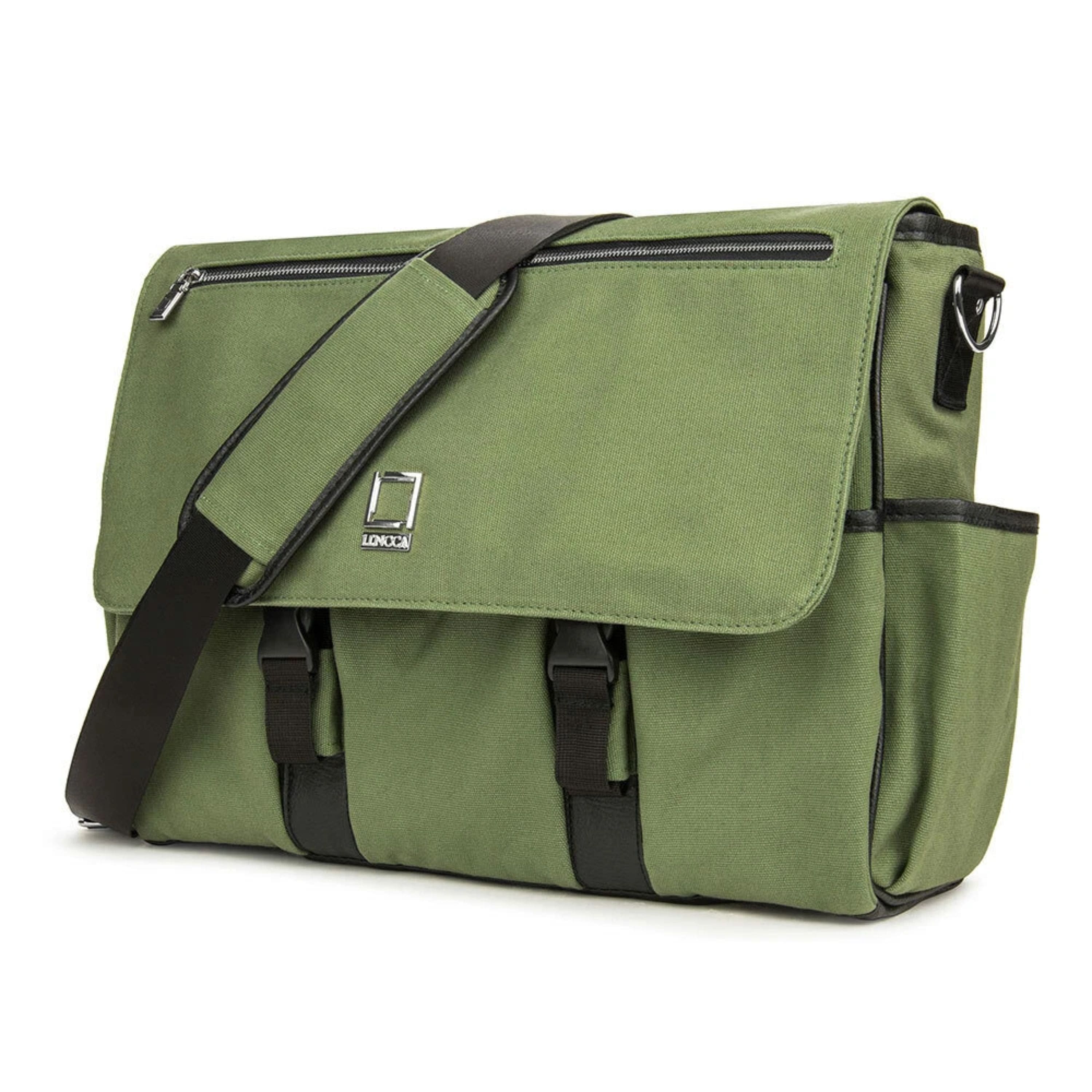
The Forest Green Camera Messenger Bag positions itself as a versatile hybrid. At its core is a removable padded camera cube that can hold a camera body and 2-3 lenses. Remove the cube, and you have a spacious general-purpose messenger bag with a dedicated laptop compartment. The water-resistant coated cotton canvas and metal feet are practical touches that elevate it above basic bags.
| Specification | Details |
|---|---|
| Material | Water-resistant coated cotton canvas, soft polyester lining |
| Exterior Dimensions | 17″ W x 6.5″ D x 11.75″ H |
| Interior Dimensions (Main) | 16″ W x 5.5″ D x 11.25″ H |
| Laptop Compartment | Fits up to 15.6″ laptop/tablet |
| Camera Insert | Removable padded organizer for DSLR/mirrorless + 2-3 lenses |
| Shoulder Strap | Adjustable, padded, removable (up to 65.5″) |
| Special Features | Metal feet, key clip, exterior tripod straps, multiple pockets |
Real-World Performance & Feature Analysis
Design & Build Quality: First Impressions Matter
Unboxing the bag, the forest green color is immediately appealing—it’s a rich, neutral tone that doesn’t attract unwanted attention. The cotton canvas feels robust and has a slight waxed texture that hints at its water-resistant properties. The zippers are large and have sturdy pulls, a small but critical detail that prevents frustration when you’re trying to access your gear quickly. The metal feet are a pro-level touch you don’t often see at this price point; they genuinely help keep the bag clean and dry when you have to set it down on a damp surface.
Why it matters: A bag’s design dictates how you use it. The low-profile appearance means you’re less of a target for theft compared to obvious camera bags. The robust zippers and metal feet are investments in longevity, preventing common failure points.
Performance in Real Use: Two Real Scenarios
Scenario 1: The Urban Commute & Client Meeting I loaded the bag with a Fujifilm X-T5, a 16-55mm f/2.8 lens attached, two additional prime lenses, a 13-inch MacBook Pro, a notebook, and my usual EDC items. The bag swallowed everything comfortably. The laptop sleeve is well-padded and secure. Walking through the city, the bag felt balanced, though the weight of the camera gear plus laptop was noticeable after about 20 minutes of walking. At the client’s office, the bag looked professional leaning against my chair—no one would guess it was full of camera gear.
Scenario 2: A Weekend Photo Walk in Drizzly Weather For a lighter loadout, I took just the camera with two lenses. The bag felt nimble and comfortable. When a light rain started, the water beaded up and rolled off the canvas. After 30 minutes, the exterior was damp but nothing penetrated the interior. The quick-access front pocket was perfect for a lens cloth and filters. However, changing lenses required unstrapping the bag and opening the main flap—not as fast as a dedicated sling bag with side access.
The Trade-Off: You gain style and discretion but sacrifice the rapid, one-handed access that specialized photography bags offer. This is the fundamental compromise of this design.
Ease of Use: The Day-to-Day Experience
The removable insert is the bag’s killer feature. It’s secured by Velcro, so pulling it out to use the bag for a weekend trip (sans camera) takes seconds. The interior pockets are useful for batteries, memory cards, and cables, but they’re not overly complex. The adjustable strap is easy to modify on the fly, and the padding is sufficient, though it could be thicker for heavier loads.
Non-Obvious Limitation: The main compartment is one large space. Without the insert, smaller items can tumble around. You’ll want to use pouches or cases for organization if you frequently use it as a general messenger bag.
Durability & Reliability: Will It Last?
After several weeks of use, the bag shows no signs of wear. The stitching is tight and consistent throughout. The canvas has scuffed slightly in one corner, which actually adds to its character. The water resistance has held up well. The real test for longevity will be the stress points: where the strap attaches to the bag and the zippers. Based on the initial build quality, these look robust. It’s not built to the indestructible standards of a $300 bag, but it feels like it will easily last for years with normal use.
Pros & Cons
Pros:
- Excellent Discreet Design: Looks more like a stylish messenger bag than camera gear.
- Effective Water Resistance: Provides genuine peace of mind in light rain.
- Highly Versatile: The removable insert makes it two bags in one.
- Good Value: Offers features (metal feet, quality zippers) often found on more expensive bags.
- Comfortable for Medium Loads: Well-padded strap and back panel for typical daily carry.
Cons:
- Weight Distribution: Messenger style can cause shoulder fatigue with heavy gear.
- Slower Access: No side or rear access panels for grabbing gear on the fly.
- Limited Customization: The insert’s compartments are fixed; you can’t rearrange dividers like in premium bags.
- Not for Downpours: Water-resistant, not waterproof; a heavy storm will eventually soak through.
Comparison & Alternatives
To put this bag in context, let’s compare it to two common alternatives at different price points.
Cheaper Alternative: AmazonBasics DSLR and Laptop Backpack (~$35)
Value Difference: The AmazonBasics bag is a pure function-over-form option. It’s a backpack, so it distributes weight better for heavy loads. It has more dedicated pockets and often a similar padded insert.
When to Choose It: If your primary concern is budget and maximum gear protection for the price, and you don’t care about style. It’s a workhorse, but it looks like one.
Premium Alternative: Peak Design Everyday Messenger Bag (~$200)
Value Difference: The Peak Design bag is in a different league. It features a patented folding divider system for infinitely customizable organization, ultra-fast MagLatch access, and superior, weatherproof materials. The comfort and build quality are exceptional.
When to Choose It: If you’re a professional or serious enthusiast who needs rapid access, carries a diverse kit, and demands top-tier durability and weather protection. It’s a significant investment for those who rely on their gear daily.
The Verdict: The Forest Green Messenger Bag sits perfectly in the middle. It’s for those who have outgrown the basic backpack but aren’t ready to invest in a premium system, prioritizing style and daily usability over specialized, high-speed functionality.
Buying Guide / Who Should Buy
Best for Beginners: This is an excellent first “real” camera bag for someone moving beyond the kit they started with. It teaches good organization habits with its simple insert and provides essential protection without being overwhelming. The versatility means it grows with you as you add more gear.
Best for Professionals/Advanced Users: It’s ideal as a secondary bag for professionals. Think of it as your “day off” bag or your go-to for personal projects, client meetings, or travel where you want to travel light and look low-key. It’s not meant to replace a core system for a paid gig with multiple bodies and lenses.
Not Recommended For:
- Wildlife or Sports Photographers: These disciplines require immediate access to long lenses and second bodies, which this bag’s design cannot provide.
- Those with Chronic Back/Shoulder Pain: The messenger style will exacerbate asymmetry and strain.
- Photographers in Extreme Weather: If you’re frequently in heavy rain or dusty environments, a fully waterproof or sealed backpack is a safer bet.
FAQ
Is the bag truly waterproof?
No, it is water-resistant. This is a crucial distinction. It will handle a walk in the rain or a spilled coffee with ease, but submerging it or being in a torrential downpour for an extended period will lead to water seeping through the seams and zippers. For most urban and casual use, the resistance is more than adequate.
How does the forest green color hold up over time? Does it get dirty easily?
The dark, earthy green is surprisingly good at hiding dust and minor scuffs. I’ve found it requires less frequent cleaning than a black bag, which shows dust easily, or a light-colored bag, which shows stains. The material can be spot-cleaned with a damp cloth.
Can it fit a full-frame DSLR like a Canon 5D with a battery grip?
It can fit a full-frame body, but a camera with a battery grip will be a very tight squeeze, especially if you want to keep a lens attached. You’d likely need to store the body and lens separately within the insert. This bag is better suited for mirrorless cameras or DSLRs without a grip.
Is this bag worth $60?
Based on the materials, construction, and thoughtful features like the metal feet and removable insert, yes, it represents solid value. You’re paying for a well-executed hybrid bag that doesn’t cut obvious corners. If your needs align with its strengths—style, versatility, and light-to-medium duty protection—it’s a worthwhile purchase.