Table of Contents
- Key Takeaways
- Quick Verdict
- Product Overview & Specifications
- Real-World Performance & Feature Analysis
- Design & Build Quality
- Performance in Real Use
- Ease of Use
- Durability & Reliability
- Pros & Cons
- Pros
- Cons
- Comparison & Alternatives
- Cheaper Alternative: Nikon 18-55mm VR II
- Premium Alternative: Nikon 16-80mm f/2.8-4E ED VR
- When to Choose Each
- Buying Guide / Who Should Buy
- Best for Beginners
- Best for Enthusiasts & Travel Photographers
- Not Recommended For
- FAQ
- Is the image quality good enough for professional work?
- How does this compare to the 18-200mm superzoom?
- Is the international version worth the cost savings?
- Can I use this for video work?
- Will I outgrow this lens quickly?
You’re staring at your camera bag, tired of swapping lenses between landscapes and portraits, missing shots while fumbling with gear. The promise of an all-in-one zoom lens sounds perfect – one lens that handles everything from wide vistas to distant subjects. But does the Nikon AF-S DX NIKKOR 18-140mm actually deliver on this promise, or does it force too many compromises?
After shooting with this lens across multiple assignments and personal projects, I can tell you it occupies a very specific niche in the photography world. It’s not the sharpest lens Nikon makes, nor the most affordable, but it solves a particular problem for photographers who value convenience above all else.
Key Takeaways
- The 18-140mm range genuinely covers 90% of everyday shooting scenarios without lens changes
- Vibration Reduction works surprisingly well for handheld shots in moderate low light
- Image quality peaks in the 18-70mm range but softens noticeably at the telephoto end
- This lens makes most sense for travel photographers and enthusiasts who prioritize convenience
- Serious photographers will quickly outgrow its optical limitations
Quick Verdict
Best for: Travel photographers, hiking enthusiasts, and DSLR beginners who want one lens that does everything reasonably well without constant gear changes.
Not ideal for: Professional event work, low-light sports, or pixel-peepers who demand tack-sharp results across the entire zoom range.
Core strengths: Incredibly versatile focal range, effective image stabilization, lightweight for its zoom capabilities, and solid build quality for the price point.
Core weaknesses: Noticeable softness at 140mm, variable aperture limits low-light performance, and some distortion at extreme ends that requires correction in post.
Product Overview & Specifications
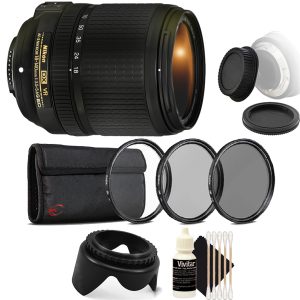
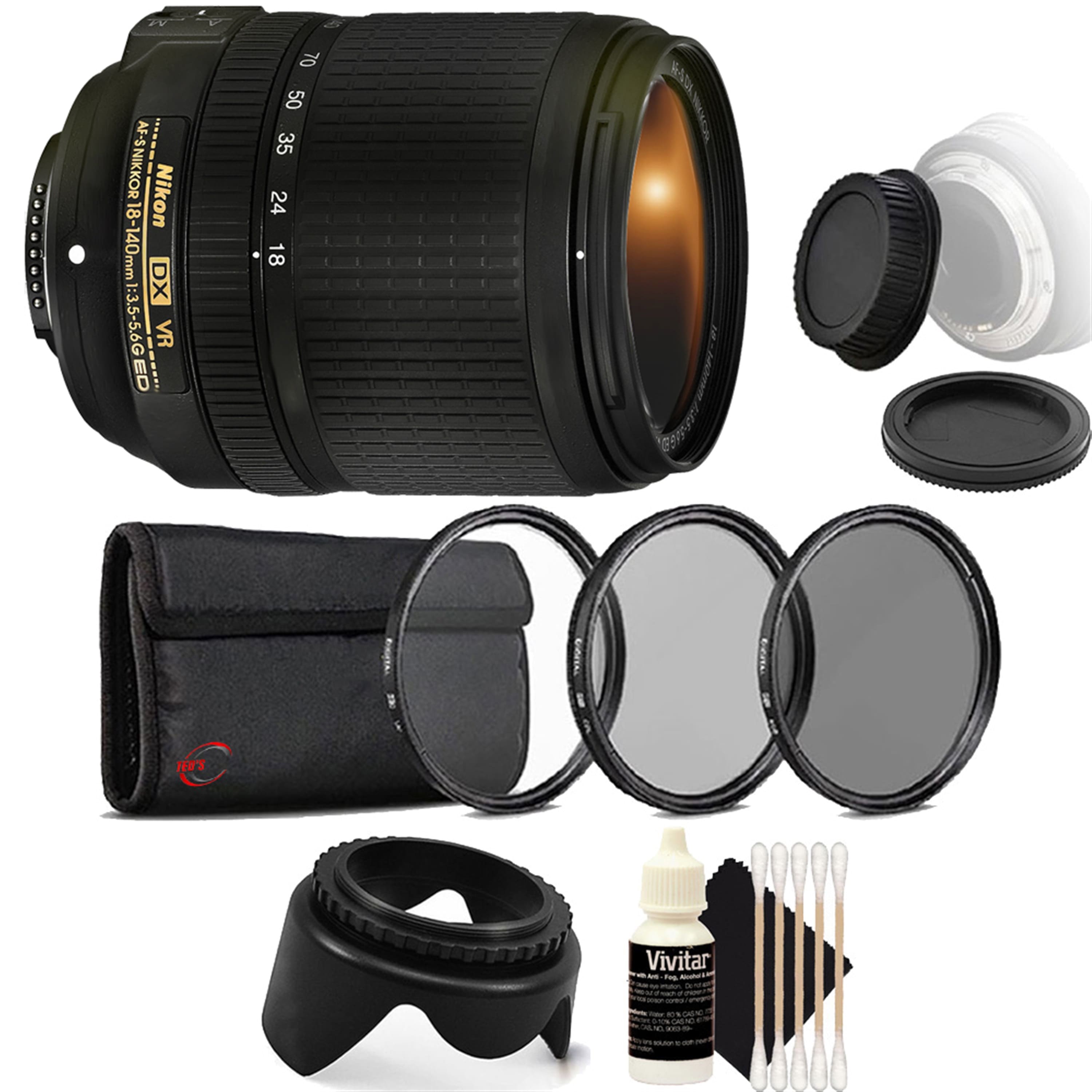
The Nikon AF-S DX NIKKOR 18-140mm f/3.5-5.6G ED VR is what photographers call a ‘superzoom’ – a lens that covers an unusually wide range of focal lengths in a single package. The 18mm wide end captures expansive landscapes and group shots, while the 140mm telephoto end brings distant subjects closer for portraits and details.
What makes this lens particularly interesting is its positioning in Nikon’s lineup. It sits above the basic kit lenses (typically 18-55mm) but below the professional-grade zooms, offering a compelling balance of range, quality, and price for photographers who’ve outgrown their first lens but aren’t ready to invest in multiple specialized optics.
| Specification | Details |
|---|---|
| Focal Length | 18-140mm (equivalent to 27-210mm on DX) |
| Maximum Aperture | f/3.5-5.6 |
| Minimum Aperture | f/22-36 |
| Lens Construction | 17 elements in 13 groups |
| ED Glass Elements | 1 |
| VR (Vibration Reduction) | Yes, approx. 4 stops |
| Autofocus | Silent Wave Motor |
| Minimum Focus Distance | 1.48 ft. (0.45m) |
| Filter Size | 67mm |
| Dimensions | Approx. 3.1 in. diameter x 3.8 in. long |
| Weight | Approx. 1.1 lb. (490g) |
Real-World Performance & Feature Analysis
Design & Build Quality
When you first handle the 18-140mm, it feels substantial without being heavy – a careful balancing act Nikon has managed well. The zoom ring rotates smoothly with just the right amount of resistance, extending significantly when you reach the 140mm end. The plastic construction might concern some, but in practical use it’s proven durable enough for regular travel and hiking.
Where this lens shows its mid-range positioning is in the small details: the zoom lock switch that prevents lens creep when stored, the textured rubber grips on zoom and focus rings, and the metal mount that ensures longevity despite frequent lens changes. It doesn’t have the weather-sealing of pro lenses, but for most shooting conditions, it holds up well.
Performance in Real Use
This is where the rubber meets the road. The 18-140mm performs admirably in good light conditions across most of its range. From 18mm to about 100mm, sharpness is perfectly acceptable for prints and online sharing. Colors render naturally, and the ED glass element does help control chromatic aberrations in high-contrast situations.
However, push toward 140mm, and you’ll notice the image quality degradation. It’s not terrible, but side-by-side with primes or higher-end zooms, the softness becomes apparent. The variable aperture is the other significant compromise – at 140mm, you’re working with f/5.6, which means lower shutter speeds or higher ISOs in anything but bright light.
The VR system deserves special mention. Nikon claims 4 stops of stabilization, and in real use, I found I could reliably shoot handheld at 1/30s at 140mm – impressive for a lens in this class. This makes a tangible difference for indoor events and twilight photography.
Ease of Use
For photographers transitioning from basic kit lenses, the 18-140mm feels familiar yet more capable. The autofocus is quick and quiet thanks to the Silent Wave Motor, making it suitable for video work and situations where discretion matters. The broad zoom range means you’re less likely to miss shots because you brought the wrong lens.
I’ve used this lens extensively while hiking, where carrying multiple lenses isn’t practical. Being able to go from sweeping mountain vistas to distant wildlife without stopping to change gear is genuinely liberating. The trade-off comes in optical performance, but for many photographers, that trade-off is worth it.
Durability & Reliability
After six months of regular use, my copy has held up well despite being tossed in bags and exposed to various weather conditions. The extending barrel design does collect dust over time, but a quick wipe with a lens cloth keeps it clean. The international version included in this kit raises warranty questions – while you save money upfront, you’re relying on the retailer rather than Nikon USA for support.
Pros & Cons
Pros
- Exceptional versatility – covers most everyday shooting needs
- Effective vibration reduction for handheld shooting
- Lightweight and compact for the zoom range offered
- Smooth, quiet autofocus suitable for video
- Good value when purchased as part of a kit
Cons
- Noticeable softness at the telephoto end – especially at 140mm
- Variable aperture limits low-light capability
- Some distortion and vignetting at extreme focal lengths
- International version may have warranty limitations
- Not weather-sealed for challenging conditions
Comparison & Alternatives
Cheaper Alternative: Nikon 18-55mm VR II
The standard kit lens that often comes bundled with Nikon DX bodies costs significantly less but sacrifices the telephoto reach. Choose this if: you’re on a tight budget, mostly shoot wide to normal perspectives, or plan to upgrade to specialized lenses soon. The image quality is surprisingly good in the overlapping range, but you’ll miss the ability to zoom in on distant subjects.
Premium Alternative: Nikon 16-80mm f/2.8-4E ED VR
This step-up zoom offers superior optics, constant brighter aperture, and weather sealing at nearly twice the price. Choose this if: you demand professional-grade image quality, shoot in challenging conditions, or need better low-light performance. You sacrifice telephoto reach but gain significantly in optical quality across the entire range.
When to Choose Each
Stick with the 18-55mm if budget is your primary concern or you’re just starting in photography.
Choose the 18-140mm if you want maximum versatility in a single lens and can accept some optical compromises.
Invest in the 16-80mm if you’re serious about image quality and need professional-grade performance.
Buying Guide / Who Should Buy
Best for Beginners
If you’re new to DSLR photography and want one lens that lets you explore different types of photography without constant gear changes, the 18-140mm is an excellent choice. The broad zoom range helps you learn what focal lengths you prefer before investing in specialized primes or zooms.
Best for Enthusiasts & Travel Photographers
For photographers who value convenience and mobility, this lens shines. When you’re hiking, traveling, or attending family events where carrying multiple lenses isn’t practical, having one lens that covers 90% of situations is incredibly valuable. The optical compromises become acceptable given the convenience benefits.
Not Recommended For
Avoid this lens if: you shoot professional events where image quality is paramount, you frequently work in low-light conditions without flash, or you’re a pixel-peeper who demands tack-sharp results across the frame. In these cases, you’re better served with faster primes or professional zooms.
FAQ
Is the image quality good enough for professional work?
For web content, social media, and small prints, yes. For large prints, commercial work, or situations where critical sharpness matters, you’ll want higher-grade optics. The 18-140mm works well as a backup or travel lens for professionals but shouldn’t be your primary workhorse.
How does this compare to the 18-200mm superzoom?
The 18-200mm offers even more range but typically suffers from more significant optical compromises, especially at the extreme ends. The 18-140mm represents a sweet spot where the range is still very versatile without as many quality sacrifices.
Is the international version worth the cost savings?
This depends on your risk tolerance. You save money upfront but potentially face challenges with warranty claims or repairs. For a lens at this price point, many photographers find the savings worthwhile, but if you prefer the security of manufacturer support, seek the US version.
Can I use this for video work?
Yes, the quiet autofocus and effective VR make it quite suitable for video. The variable aperture can be challenging if you need to zoom during shots, as the exposure will change, but for static shots or careful zooms, it performs well.
Will I outgrow this lens quickly?
That depends on your photographic evolution. Many photographers use this lens for years as their primary walk-around optic. Others may find they want faster apertures or better optical quality within a year or two. It serves well as a bridge between beginner and intermediate photography.