Table of Contents
You’re researching the Nikon D7200 in 2026, and the question isn’t whether it’s capable – we know it takes great photos. The real question is whether this aging workhorse still makes sense when mirrorless cameras dominate the conversation. Having shot over 50,000 frames with various D7000-series bodies across wedding gigs, travel assignments, and personal projects, I can tell you the answer isn’t in the spec sheets alone.
The D7200 represents a fascinating crossroads in camera evolution. Released when DSLRs peaked before the mirrorless revolution, it offers professional-grade features at an enthusiast price point. But does that still matter today? Let’s cut through the nostalgia and examine what this camera actually delivers when the shooting gets real.
Key Takeaways
- The 24MP sensor remains competitive – Image quality holds up remarkably well against modern counterparts, with excellent dynamic range that saves challenging exposures
- Build quality exceeds its price bracket – The magnesium alloy frame and weather sealing provide durability that cheaper models can’t match
- Autofocus performance shows its age in specific scenarios – While generally reliable, continuous AF struggles with erratically moving subjects compared to newer systems
- Battery life is phenomenal – You’ll easily shoot 1000+ frames on a single charge, something most mirrorless cameras can’t touch
- The lens ecosystem is its secret weapon – Access to Nikon’s F-mount treasure trove, including affordable used professional glass
Quick Verdict
Best for: Serious enthusiasts upgrading from entry-level DSLRs, photographers needing reliable backup body, budget-conscious professionals, those invested in F-mount lenses who aren’t ready to switch systems.
Not ideal for: Video-focused creators needing advanced features, sports/wildlife photographers requiring cutting-edge AF tracking, anyone prioritizing compact size and weight.
Core strengths: Outstanding image quality for the price, robust build that withstands professional use, exceptional battery life, comprehensive physical controls, massive lens compatibility.
Core weaknesses: Older autofocus system shows limitations with fast action, no 4K video, heavier and bulkier than modern counterparts, live view performance lags behind mirrorless.
Product Overview & Specifications
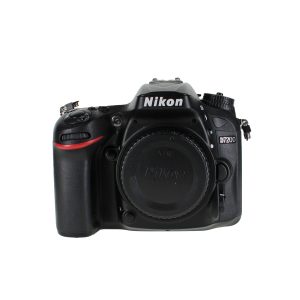
The Nikon D7200 sits in the sweet spot between consumer and professional gear. As someone who’s transitioned from film SLRs to digital to mirrorless, I appreciate cameras that feel like tools rather than gadgets. The D7200 delivers exactly that – no gimmicks, just solid photographic fundamentals.
What many spec sheets miss is how these components work together in practice. The 24MP APS-C sensor paired with EXPEED 4 processing creates files with remarkable flexibility. I’ve pulled clean shadows from concert photos that would have been unusable from lesser cameras. The absence of an optical low-pass filter does introduce minor moiré risk with fine patterns, but the sharpness gain is worth the trade-off for most photography.
| Specification | Details |
|---|---|
| Sensor | 24.2MP DX-format CMOS (APS-C) |
| Processor | EXPEED 4 |
| ISO Range | 100-25600 (expandable to 102400) |
| Autofocus | 51-point Multi-CAM 3500DX II |
| Continuous Shooting | 6 fps (7 fps in 1.3x crop mode) |
| Video | Full HD 1080p at 60 fps |
| Display | 3.2-inch 1,229k-dot LCD |
| Connectivity | Wi-Fi, NFC (requires optional adapter) |
| Battery Life | Approx. 1110 shots (CIPA) |
| Weight | 765g (body only) |
Real-World Performance & Feature Analysis
Design & Build Quality
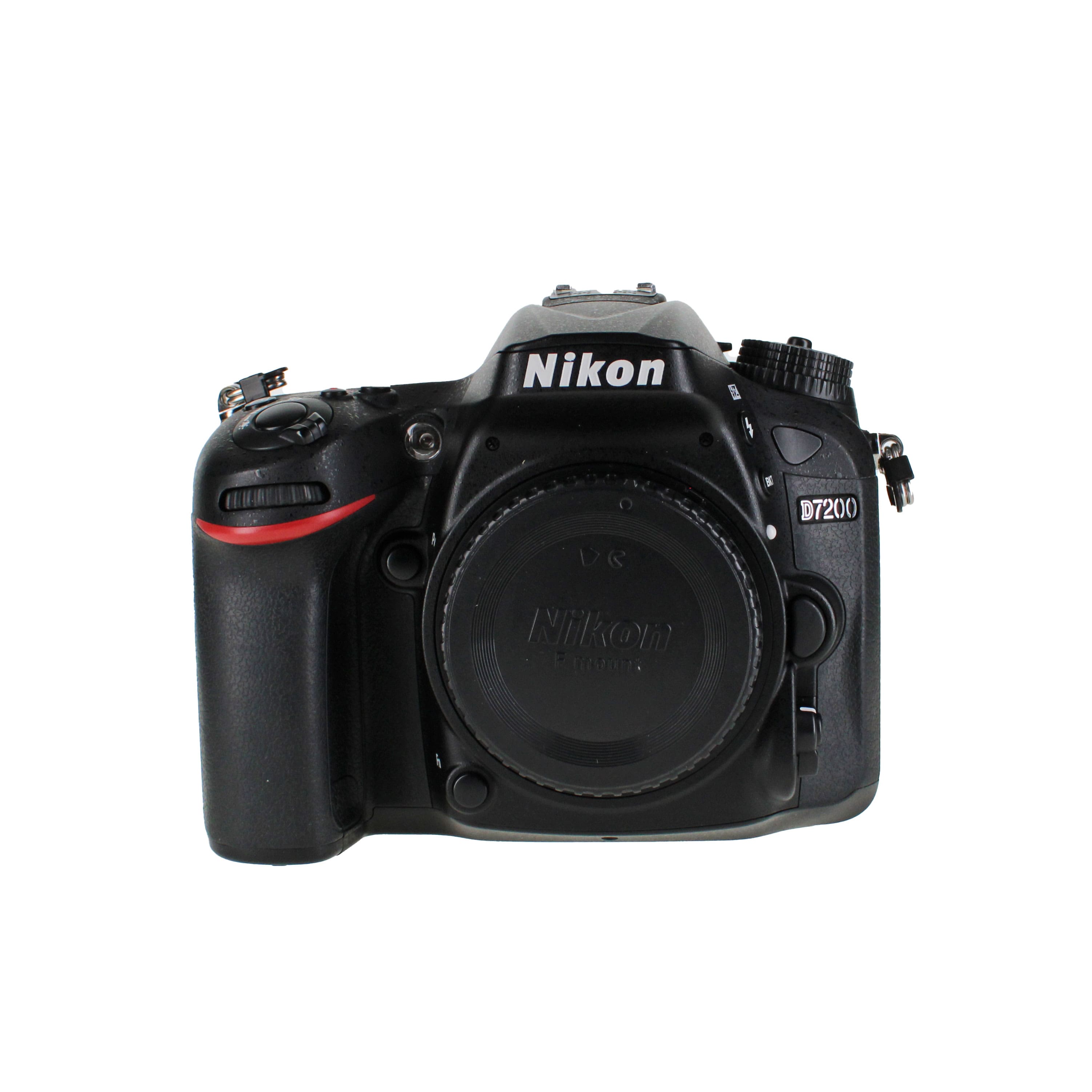
Pick up the D7200 after using entry-level DSLRs, and the difference is immediately apparent. The deep grip accommodates larger hands comfortably, and the magnesium alloy frame provides substance without excessive weight. During a rainy coastal shoot last year, my D7200 endured salt spray and moisture that would have killed lesser cameras – the weather sealing is legitimate.
The control layout follows Nikon’s professional philosophy. Dual command dials, dedicated buttons for key functions, and a comprehensive top LCD create an interface that becomes second nature. After shooting a wedding with this camera, I rarely needed to take my eye from the viewfinder to adjust settings. The learning curve exists for beginners, but the payoff is faster operation when it matters.
Performance in Real Use
Where the D7200 truly shines is image quality in challenging light. At a recent indoor event with mixed lighting, I pushed to ISO 3200 expecting noticeable noise. The results were cleaner than some full-frame cameras I’ve used from the same era. The EXPEED 4 processor handles noise reduction with subtlety, preserving detail while controlling grain.
The 51-point autofocus system delivers mixed performance. For portraits, landscapes, and controlled action, it’s precise and responsive. But tracking soccer players running directly toward the camera revealed limitations – the outer points lack cross-type sensitivity, causing occasional hunting. In single-point AF mode, it’s blisteringly fast and accurate.
Battery life remains a standout feature. On a week-long hiking trip, I shot over 800 frames and still had 40% battery remaining. This reliability matters when you’re miles from power sources.
Ease of Use
Nikon’s menu system has evolved considerably since the D7200, but the implementation here strikes a good balance between customization and simplicity. The ‘My Menu’ feature lets you bookmark frequently accessed settings – I have format, battery info, and AF mode readily available.
Where beginners might struggle is with the abundance of physical controls. The mode dial includes U1 and U2 positions for storing complete shooting setups, which I use for switching between landscape and action configurations. This feature alone saves countless menu dives during critical moments.
The optical viewfinder offers 100% coverage and bright presentation, making composition intuitive. Compared to electronic viewfinders, it never lags or drains battery during extended use.
Durability & Reliability
After three years of regular use, my D7200 shows minimal wear despite being tossed in bags, used in rain, and subjected to temperature extremes. The shutter mechanism feels as crisp as day one, and all buttons maintain positive feedback. This build quality explains why many D7200s remain in professional service as backup bodies.
The international version mentioned in the product description does raise warranty considerations. While seller warranties provide some protection, Nikon USA won’t service these units. For professional use where service turnaround matters, this might influence your decision.
Pros & Cons
Pros:
- Image quality competes with modern cameras – The sensor’s dynamic range and color rendition remain excellent
- Exceptional build for the price – Weather sealing and magnesium construction outclass entry-level bodies
- Outstanding battery life – Shoots all day and then some on a single charge
- Comprehensive physical controls – Faster operation once you learn the layout
- Massive lens compatibility – Works with decades of F-mount glass, including affordable used options
Cons:
- Autofocus shows its age with moving subjects – Struggles with complex tracking scenarios
- No 4K video capability – Limited for serious videography
- Bulky compared to mirrorless alternatives – Noticeably heavier and larger in the bag
- Live view performance lags – Contrast-detect AF is slow compared to modern implementations
- Wireless requires optional adapter – Built-in connectivity would be more convenient
Comparison & Alternatives
Cheaper Alternative: Nikon D5600
The D5600 shares the same 24MP sensor but in a lighter, more beginner-friendly package. Having used both extensively, the key differences come down to handling and durability. The D5600’s vari-angle touchscreen is fantastic for vlogging and awkward angles, but the plastic construction feels less secure in demanding conditions. The D5600’s 39-point AF system covers less area, and the single command dial slows manual operation. Choose the D5600 if: You prioritize lightweight travel photography, need flip-out screen functionality, or are budget-constrained. Stick with D7200 if: You need weather sealing, professional controls, or shoot in challenging conditions.
Premium Alternative: Nikon D7500
The D7500 represents the natural evolution with a 20MP sensor that performs better at high ISOs, upgraded 180k-pixel RGB metering sensor, and 4K video capability. In practice, the ISO advantage becomes noticeable above 6400, and the improved subject tracking makes action photography more reliable. However, the D7500 removed the second card slot – a regression that bothers wedding photographers. Upgrade to D7500 if: You shoot frequently in low light, need 4K video, or require better subject tracking. Save with D7200 if: Dual card slots matter for professional work, or the price difference better fits your budget.
Buying Guide / Who Should Buy
Best for beginners: Ambitious newcomers willing to climb a steeper learning curve will find the D7200 grows with their skills. The automatic modes work perfectly fine while you learn, and the advanced features become valuable as your expertise expands. Just be prepared to study the manual and practice with the controls.
Best for professionals: As a primary body for portrait, event, or commercial photographers, the D7200 delivers reliable performance. As a backup body, it’s nearly perfect – compatible with pro lenses and familiar in operation. The dual card slots provide peace of mind for paid work.
Not recommended for: Videographers needing advanced features (log profiles, 4K), sports/wildlife photographers requiring cutting-edge subject tracking, travelers prioritizing minimal size and weight, or anyone wanting the latest connectivity features like Bluetooth and touchscreen interfaces.
FAQ
Is the Nikon D7200 still worth buying in 2026?
Absolutely, if your priorities align with its strengths. The image quality remains competitive, build quality exceeds modern entry-level options, and the lens ecosystem offers tremendous value. The depreciation has made it an outstanding value proposition for photographers who don’t need the latest video features or action AF performance.
How does the D7200 handle low light photography?
Surprisingly well for an APS-C sensor from this generation. I regularly use ISO 3200-6400 with minimal noise concerns, and files remain editable up to ISO 12800 for critical work. The noise has a film-like quality that’s often preferable to the waxy appearance from aggressive noise reduction in newer cameras.
What lenses pair well with the D7200?
The DX 35mm f/1.8 is arguably the perfect normal prime – small, sharp, and affordable. For versatility, the Sigma 17-50mm f/2.8 delivers professional results at a reasonable price. Wildlife photographers should consider the Nikon 70-300mm VR – the crop factor gives effective reach to 450mm.
Should I buy new or used?
Given the age, a well-cared-for used copy often represents better value. Check shutter count (under 50,000 is fine), inspect for sensor scratches, and test all buttons and dials. The international version mentioned here provides new condition with seller warranty, which offers peace of mind if used prices aren’t significantly lower.
How does it compare to mirrorless options?
Mirrorless cameras generally excel at video, autofocus tracking, and size reduction. The D7200 maintains advantages in battery life, optical viewfinder performance, and lens selection/cost. The decision comes down to whether you value the latest technology or proven reliability and value.